Welcome to the Scientific Consortium

Join the Consortium. It is FREE....... Email your brief resume and photograph.

Tuesday, June 16, 2015

Giving name to new disease without causing harm or stigma to anyone

When there is emergence of a new disease, it is generally given a common name by the reporting scientists or the media which attracts quick attention of the masses and gets communicated across the globe very fast through rapid electronic means. Many times, such common names may give wrong perception of the disease, may incite undue fear or may cause far reaching negative economic or social consequences. WHO, OIE and FAO have developed best practices for the naming of new human diseases in such a manner that their names do not cause unnecessary negative impact on trade, travel, tourism or animal welfare, and avoid causing offence to any cultural, social, national, regional, professional or ethnic groups. WHO strongly encourage scientists, national authorities, the national and international media and other stakeholders to follow the best practices so that inappropriate names do not become established. These practices include:
  1. Use generic descriptive terms such as respiratory disease, hepatitis, neurologic syndrome, watery diarrhoea, enteritis.
  2. Specific descriptive terms may be used with preference to plain terms rather than highly technical terms, e.g. progressive, juvenile, pediatric, senile, maternal, severe, winter, subterranean, coastal, river, swamp etc.
  3. If the causative pathogen is known, it should be used as part of the disease name with additional descriptors e.g. novel coronavirus respiratory syndrome, influenza virus, parasitic.
  4. Names should be short and easy to pronounce e.g. H7N9.
  5. Long names are likely to be shortened into an acronym, hence, potential acronyms should be evaluated to ensure they also comply with these best practices.
  6. Names should be as consistent as possible with guidance from the International Classification of Diseases (ICD) Content Model Reference Guide.
  7. Avoid following terms:
  • Avoid geographic locations: Cities, countries, regions, continents e.g. Middle East Respiratory Syndrome, Spanish Flu, Rift Valley fever, Lyme disease, Crimean Congo hemorrhagic fever, Japanese encephalitis
  • Avoid people’s names: e.g. Creutzfeldt-Jakob disease, Chagas disease
    Species/class of animal or food: e.g. swine flu, bird flu, monkey pox, equine encephalitis, paralytic shellfish poisoning
  • Avoid cultural, population, industry or occupational references: Occupational, legionnaires, miners, butchers, cooks, nurses 
  • Avoid terms which incite undue fear: e.g. unknown, death, fatal, epidemic
Source: WHO (2015) and Science (2015) DOI: 10.1126/science. 348.6235.643

Tuesday, June 9, 2015

Antibiotics Use and Misuse: A Monograph

The Indian College of Physicians, the academic wing of the Association of Physicians of India has brought out a monograph on ‘Antibiotics Use and Misuse’ edited by Dr. Dhruva Chaudhry (dhruvachaudhry@yahoo.co.in) and Dr. Subhash Todi (drsubhashtodi@gmail.com). It has been divided into 3 sections. In the first section, discussion is about the rationale and appropriate use of antibiotics including suggested antibiotics for various infections with dosing followed by their use in outpatient departments, indoors, intensive care, immunecompromised states and peri-operative area. The second section discusses their misuse particularly over the counter use and use in veterinary, differences in urban and non urban consumption and how the antibiotics are being used in developing countries including India. The last section gives perspective of microbiologists towards antibiotic resistance, issues related to regulations and how audits can improve the prescription behaviour, compliance to regulations and lastly the Chennai Declaration – an initiative of professional medical bodies, which provides a road map to reduce the incidence of resistance and introducing the culture of discipline in antibiotic use and prescription in the country. The monograph is authored by a mix of physicians, intensivists, microbiologists, administrators, clinical pharmacologist and veterinary public health professionals, well known in their respective areas to have a 360 degree view on the issue. The contents of the monograph are as under:

Section 1 – Rational Antibiotic Use
  • Chapter 1: Guidelines for Antibiotic Use in India by George M. Varghese (georgemvarghese@hotmail.com) and Paul Trowbridge (ptrowb@hotmail.com)
  • Chapter 2: Use and Abuse of Antibiotics in Outdoor (OPD) Patients by Dhruva Chaudhry (dhruvachaudhry@yahoo.co.in) and Mukesh Sharma (drmks80@gmail.com)
  • Chapter 3: Antibiotic Use and Abuse in Inpatients (Medical and Surgical) by Dhruva Chaudhry (dhruvachaudhry@yahoo.com) and Sunny Virdi (drsunnyvirdi@gmail.com)
  • Chapter 4: Use and Misuse of Antibiotics in the Intensive Care Unit by Subhash Todi (drsubhashtodi@gmail.com)
  • Chapter 5: Antibiotics in Peri-operative Care by J. V. Divatia (jdivatia@yahoo.com) and Amol Kothekar 
  • Chapter 6: Antibiotics in an Immunocompromised Setting by Gaurav Prakash and Subhash Varma (suvarma@hotmail.com)
Section 2 – Misuse of Antibiotics
  • Chapter 7: Over the Counter Use of Antibiotics by Subhash Todi (drsubhashtodi@gmail.com) 
  • Chapter 8: Use of Antimicrobials in Veterinary and Animal Husbandry Practices by Sudhi Ranjan Garg (srgarg415@gmail.com)
  • Chapter 9: Urban and Non-urban Consumption of Antibiotics by M. C. Gupta (dr.mcgupta57@gmail.com) and Niti Mittal (drniti.mittal@gmail.com)
  • Chapter 10: Antibiotic Use in Developing Countries by Dhruva Chaudhry (dhruvachaudhry@yahoo.co.in) and Rahul Roshan (rahul.roshan81@gmail.com) 
Section 3 – Way Forward
  • Chapter 11: Regulatory Issues in Antibiotics by B. L. Sherwal (drblsa703@yahoo.co.in) and Sonal Saxena
  • Chapter 12: Microbiologist Perspectives on Antimicrobial Resistance by Raman Sardana (ramansardana@apollohospitals.com)
  • Chapter 13: Prescription Behaviour and Audit of Antibiotics by M. C. Gupta (dr.mcgupta57@gmail.com) and Savita Verma
  • Chapter 14: Antibiotic Stewardship by Neetu Jain (neetusms@yahoo.com) and Gopi C. Khilnani (gckhil@gmail.com)
  • Chapter 15: Chennai Declaration by Abdul Ghafur (drghafur@hotmail.com) 

Sunday, June 7, 2015

World Health Assembly addresses antimicrobial resistance


The World Health Assembly recently made resolutions to tackle antimicrobial resistance. Delegates endorsed a global action plan to tackle antimicrobial resistance - including antibiotic resistance, the most urgent drug resistance trend. Antimicrobial resistance is occurring everywhere in the world, compromising our ability to treat infectious diseases, as well as undermining many other advances in health and medicine.
The plan sets out 5 objectives:
  1. Improve awareness and understanding of antimicrobial resistance.
  2. Strengthen surveillance and research.
  3. Reduce the incidence of infection.
  4. Optimize the use of antimicrobial medicines.
  5. Ensure sustainable investment in countering antimicrobial resistance.
The resolution urges Member States to put the plan into action, adapting it to their national priorities and specific contexts and mobilizing additional resources for its implementation. Through adoption of the global plan, governments all committed to have in place, by May 2017, a national action plan on antimicrobial resistance that is aligned with the global action plan. It needs to cover the use of antimicrobial medicines in animal health and agriculture, as well as for human health. WHO will work with countries to support the development and implementation of their national plans, and will report progress to the Health Assembly in 2017.

Source: WHO

Saturday, June 6, 2015

10 facts about zoonotic neglected tropical diseases (zNTD)


Zoonoses are diseases that are naturally transmitted from vertebrate animals to humans and vice-versa. Neglected zoonotic diseases are a subset of the neglected tropical diseases. The term “neglected” highlights that the diseases affect mainly poor and marginalized populations in low-resource settings. There is now recognition that several zoonotic diseases within the Neglected Tropical Diseases (NTD) merit attention and these include rabies, echinococcosis, taeniasis/ cysticercosis and foodborne trematodiases.
  1. Pathogens circulating in animals can create a risk for human health.
  2. Zoonotic diseases (zoonoses) are naturally transmitted from animals to humans and vice-versa.
  3. zNTDs are major causes of poor-health among rural populations.
  4. There is a pressing need to tackle zNTDs.
  5. Community participation is key to successful control programmes.
  6. Dog rabies can be eliminated.
  7. Undercooked pork is a major cause of porcine tapeworm infection.
  8. Synergy between medical and veterinary practices is crucial for a ‘One Health’ approach.
  9. WHO is addressing priority zoonotic diseases.
  10. More resources are needed to control and eliminate zNTD.
Source: WHO

Saturday, August 16, 2014

Ebola Virus Disease Outbreak


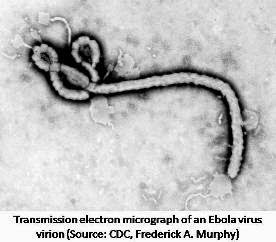
In March 2014, the Ministry of Health of Guinea notified WHO of a rapidly evolving outbreak of Ebola virus disease in forested areas of south-eastern Guinea. As of 22 March 2014, 49 cases including 29 deaths (case fatality ratio: 59%) had been reported. The disease later spread to the neighbouring countries of Liberia and Sierra Leone. It recently spread to Nigeria through a traveller from Liberia. Between 12 and 13 August 2014, a total of 152 new cases of Ebola virus disease (laboratory-confirmed, probable, and suspect cases) as well as 76 deaths were reported from Guinea, Liberia, Nigeria and Sierra Leone. As of 13 August 2014, total 2127 cases, including 1310 confirmed, 594 probable, and 223 suspect cases of Ebola virus disease have been recorded in Guinea, Liberia, Nigeria, and Sierra Leone resulting in 1145 human deaths.
The disease (previously known as Ebola haemorrhagic fever) is a severe zoonotic and often fatal disease that affects humans and nonhuman primates. It got its name because it was first recognized in a village situated near Ebola River in the Democratic Republic of the Congo (formerly Zaire) in Africa. Since its initial recognition in 1976, the disease outbreaks have been recorded in Africa. These are usually associated with very high case fatality rates up to 90%. The disease is caused by Ebolavirus. Current evidence suggests that fruit bats of the Pteropodidae family are the natural host for ebolaviruses. The virus is transmitted to people from wild animals (primates) and once the virus has entered the population, it can spread from person to person. Ebola virus disease outbreaks can devastate families and communities, but the infection can be controlled through the use of recommended protective measures in clinics and hospitals, at community gatherings, or at home. WHO recommends standard precautions in the care and treatment of all patients regardless of their perceived or confirmed infectious status. They include the basic level of infection control - hand hygiene, use of personal protective equipment to avoid direct contact with blood and body fluids, prevention of needle stick and injuries from other sharp instruments, and a set of environmental controls.

Source: WHO, CDC, Garg S.R. 2014. Ebola Haemorrhagic Fever. In: Garg S.R. (Ed.) Zoonoses: Viral, Rickettsial and Prion Diseases. Daya Publishing House, New Delhi. pp. 244-254.

Friday, May 30, 2014

Middle East Respiratory Syndrome Coronavirus Infection

Coronaviruses are a large family of viruses that cause a range of illnesses in humans and animals. The Middle East respiratory syndrome coronavirus (MERS-CoV) that causes MERS was first identified in 2012 in Saudi Arabia. Since then, globally, 635 laboratory-confirmed cases of infection with MERS-CoV have officially been reported to WHO, including 193 deaths. The affected countries in the Middle East include Jordan, Kuwait, Oman, Qatar, Saudi Arabia (KSA), United Arab Emirates (UAE) and Yemen; in Africa: Egypt and Tunisia; in Europe: France, Germany, Greece, Italy and the United Kingdom; in Asia: Malaysia and Philippines; and in North America: the United States of America (USA). All of the cases recently reported outside the Middle East (Egypt, Greece, Malaysia, the Philippines and the USA) recently travelled from countries inside of the Middle East (KSA or UAE). 

According to the Expert Meeting held in Oman recently, health experts and veterinarians are among those calling for stepped up monitoring, investigations, and immediate reporting of cases of the potentially fatal MERS, whose origins may be linked to animals. A declaration at a regional technical consultation meeting, convened by FAO and the Ministry of Agriculture and Fisheries of the Sultanate of Oman, warned countries in the region and beyond of the need for public health and veterinary authorities to carry out coordinated investigations, and share information and results. The majority of cases have occurred through human-to-human transmission, however it remains to be determined if people may have been infected by contact with environmental or animal sources. Several studies have reported high proportions of camels with antibodies against MERS-CoV or that of a closely-related virus, both in countries where human cases were detected and also in countries with no reported cases. Some of these studies have shown that MERS-CoV has been circulating in camels in Saudi Arabia since at least 1992. Genetic evidence of MERS-CoV infection was found in tests of camel samples from a farm in Qatar and in other studies in Egypt and Saudi Arabia. 

Source: WHO and FAO

Friday, March 28, 2014

India and WHO South-East Asia Region Certified Polio-Free

India as well as the WHO South-East Asia Region were certified polio-free on 27 March 2014 by an independent commission under the WHO certification process. WHO’s South-East Asia Region comprises 11 Member States: Bangladesh, Bhutan, Democratic People’s Republic of Korea, India, Indonesia, Maldives, Myanmar, Nepal, Sri Lanka, Thailand and Timor-Leste. With this step, 80% of the world’s population now lives in certified polio-free regions. Before a Region can be certified polio-free, several conditions must be satisfied such as: at least three years of zero confirmed cases due to indigenous wild poliovirus; excellent laboratory-based surveillance for poliovirus; demonstrated capacity to detect, report, and respond to imported cases of poliomyelitis; and assurance of safe containment of polioviruses in laboratories (introduced since 2000). Certification of the Region comes as countries prepare for the introduction of inactivated polio vaccine (IPV) in routine immunization as part of the eventual phasing out of oral polio vaccines (OPV). More than 120 countries currently use only OPV. These countries will introduce a dose of IPV by the end of 2015 as part of their commitment to the global polio endgame plan which aims to ensure a polio-free world by 2018.

Historically, India has been the largest endemic reservoir of polio in the world with between 50 000 to 100 000 paralytic polio cases occurring each year between 1978 and 1995. It has also been one of the main sources of polio importation for other countries. This achievement has been driven by the partnership between the Government of India, international organizations, local NGOs and other institutions. An extraordinary mobilization of health workers was necessary to reach this point, particularly in the Uttar Pradesh and Bihar states. The outcome of this has been an improved vaccine delivery system, better trained health staff and high quality surveillance, monitoring and research mechanisms. While celebrating the historic achievement, the Regional Director for the WHO South-East Asia Region, Dr. Poonam Khetrapal Singh, also sounded a word of caution to maintain high vigilance against importation of polio. “Until polio is globally eradicated, all countries are at risk and the Region’s polio-free status remains fragile. High immunization coverage can prevent an imported virus from finding an underimmunized, susceptible population. A sensitive surveillance system, able to quickly detect and identify any importation and guide a programmatic response, is critical,” she added.

Source: World Health Organization, Regional Office for South-East Asia, New Delhi

Tuesday, January 7, 2014

New Books on Zoonoses


1.    Zoonoses: Bacterial Diseases 
          ISBN: 978-93-5124-270-3 
2.    Zoonoses: Viral, Rickettsial and Prion Diseases 
          ISBN 978-93-5124-272-7
3.    Zoonoses: Parasitic and Mycotic Diseases 
          ISBN: 978-93-5124-271-0 

Edited by Sudhi Ranjan Garg
Publishing Year: 2014
Publishers: Astral International Pvt Ltd, New Delhi. www.astralint.com

Pathogens perpetuate by adapting themselves to a variety of environmental conditions and by moving from one infected host to another susceptible host. Many of these organisms affecting a large variety of animal species are also transmissible from these to man and vice versa. Such zoonotic pathogens circulating in animal population thus threaten not only animal health but also jeopardize public health. While developing countries including India are the hotspots of zoonotic diseases, developed nations too face a continuous threat from many emerging and re-emerging zoonoses. Predicting and controlling diseases at the human-animal interface is a huge challenge. Capacity building of individuals, groups, institutions, organizations and societies is essential to enhance their abilities in the area of surveillance, prevention and control of zoonotic diseases, agricultural development, food safety and food security. With One Health approach gaining momentum worldwide, integrated multidisciplinary coordinated approach assumes paramount importance in alleviating the sufferings and losses caused by zoonoses. 

This set of three books attempts to enrich all those having stake in the zoonoses control activities. Particular emphasis has been given to the risk analysis and strategies for zoonoses management in the developing nations. Equally useful to the students, teachers, researchers, academicians, policy makers and other professionals in the fields of animal health, public health, wildlife management and environmental health, these books will be a great tool for the professionals taking up advocacy, public awareness and health education programmes.

Sunday, December 29, 2013

New Year Greetings to the SCHWB Readers and Their Families

The Blessings of Peace,
The Beauty of Hope,
The Spirit of Love,
The Comfort of Faith,
May these be your gifts
For the coming New Year.


Happy New Year !

Sudhi Ranjan Garg
Department of Veterinary Public Health and Epidemiology,
College of Veterinary Sciences, LUVAS, HISAR-125004

Saturday, October 26, 2013

A person dies from rabies after trying to treat his son by sucking blood from dog-bite wound

A person died from rabies in China recently after he sucked blood from a bite wound inflicted by a stray dog on his son’s leg. He attempted this to remove any infection from the wound. The person was so anxious about his son’s injury that he squatted down immediately and started to suck the blood from the leg and spit it onto the ground, which some people do to try to treat bites from venomous snakes. Later, the son was given vaccine shots in the hospital but the father did not take vaccination due to cost considerations. He developed strong rabies symptoms and died hours after he was rushed to a hospital. Doctors reminded people not to suck out blood after being bitten by dogs, but to clean wounds with soapy water and get timely medical help.

Source: Shanghai Daily. www.shanghaidaily.com

Wednesday, October 2, 2013

FAO, OIE and WHO unite to eliminate human rabies and control the disease in animals


On the World Rabies Day (28 September 2013), FAO, OIE and WHO unite in their goal to eliminate human rabies and control the disease in animals. Every year, an estimated 60,000 people die an agonizing death from rabies, many of whom are children bitten by rabies-infected dogs. Elimination of rabies requires consistent and sustained commitment, underpinned by strong health and veterinary systems. Different sectors and disciplines need to collaborate closely, and World Rabies Day is an opportunity to establish or strengthen these links. Regional elimination of human rabies transmitted by dogs has been outlined by Latin American countries for 2015 and south-east Asia for 2020. FAO, OIE and WHO are working together to raise global awareness and commitment to step-up the fight against rabies.


Source: World Health Organization

Tuesday, September 3, 2013

Hotspots of Zoonotic Diseases

A recent study at the International Livestock Research Institute, Kenya has demonstrated a strong association between poverty, hunger, livestock keeping, and zoonoses. It further revealed that the existing disease reporting systems do not adequately capture the impact of zoonoses. There is much unpublished information in grey literature of developing countries. Across a range of zoonoses burden, poverty burden, and reliance on livestock, the most important hotspots for poverty, emerging livestock systems and zoonoses are in South Asia (India > Bangladesh > Pakistan), followed by East and Central Africa (Ethiopia > Nigeria > Congo DR > Tanzania > Sudan), South East Asia (China > Indonesia > Myanmar > Vietnam) and West Africa (Burkina Faso > Mali > Ghana). The study confirmed that a relatively small number of countries have a disproportionate share of poor livestock keepers and zoonoses burden, notably India, Ethiopia, and Nigeria.

The scientists identified and prioritized 56 zoonoses of high importance that are responsible for an estimated 2.7 human million deaths and around 2.5 billion cases of human illness a year. For the top 13 zoonoses, the figures were 2.2 million human deaths and 2.4 billion cases of illness. These diseases are most important to poor livestock keepers because of their impacts on human health, livestock sector, amenability to agriculture-based control, and other criteria. These diseases in descending order include: zoonotic gastrointestinal disease, leptospirosis, cysticercosis, zoonotic tuberculosis, rabies, leishmaniasis, brucellosis, echinococcosis, toxoplasmosis, Q fever, zoonotic trypanosomosis, hepatitis E, and anthrax). In the case of bacterial foodborne zoonoses, they identified five diseases, which ranked highest on a number of recent assessments of impact. These included salmonellosis, listeriosis, toxoplasmosis, campylobacteriosis and disease caused by diarrhoeagenic Escherichia coli.

Source: Grace et al. 2012. Mapping of poverty and likely zoonoses hotspots. Zoonoses Project 4. Report to Department for International Development, UK. International Livestock Research Institute, Kenya.

Tuesday, May 28, 2013

Foodborne Illness in Canada

Foodborne illness is a global public health concern. In a recent study, it has been estimated that in Canada each year there are 1.6 million and 2.4 million episodes of domestically acquired foodborne illness related to 30 known pathogens and unspecified agents, respectively, for a total estimate of 4.0 million episodes of domestically acquired foodborne illness in the country. Norovirus, Clostridium perfringens, Campylobacter spp., and nontyphoidal Salmonella spp. are the leading pathogens and account for approximately 90% of the pathogen-specific total. Approximately one in eight Canadians experience an episode of domestically acquired foodborne illness each year in Canada. 

Source: M. Kate Thomas, Regan Murray, Logan Flockhart, Katarina Pintar, Frank Pollari, Aamir Fazil, Andrea Nesbitt, and Barbara Marshall. 2013. Estimates of the burden of foodborne illness in Canada for 30 specified pathogens and unspecified agents, Circa 2006. Foodborne Pathogens and Disease. doi:10.1089/fpd.2012.1389

Saturday, April 13, 2013

Human Nipah Virus Infection in Bangladesh

Human Nipah virus (NiV) infection, an emerging zoonotic disease, was first recognized in a large outbreak in Malaysia and Singapore from September 1998 through May 1999. The disease also occurs in Bangladesh. Nipah surveillance in Bangladesh began in 2006. NiV is a highly pathogenic paramyxovirus belonging to genus Henipavirus. The virus is transmitted through drinking of raw date palm sap (kancha khejurer rosh) contaminated with NiV or by close physical contact with Nipah infected patients. 

This year, as of 6 April 2013, 24 cases of Nipah virus infection have been reported in Bangladesh, of which 21 cases have died since the beginning of 2013. These cases are from 13 different districts and include persons of 8 months age to 60 years. Sixteen cases are in males and eight in females. 

Source: Institute of Epidemiology, Disease Control & Research, Dhaka, Bangladesh

Human Infection with Influenza A(H7N9) Virus in China

Influenza A(H7N9) is one of a subgroup of influenza viruses that normally circulate among birds. Until recently, this virus had not been seen in people. However, human infections have now been detected. On 31 March 2013, the China Health and Family Planning Commission notified the World Health Organization of three cases of human infection with influenza A(H7N9). These recent reports from China are the first cases of human infection with H7N9 viruses. As of 12 April 2013, total 43 patients have been laboratory confirmed with influenza A(H7N9) virus in China, including 11 deaths. More than a thousand close contacts of the confirmed cases are being closely monitored. The Chinese government is actively investigating this event and has heightened disease surveillance. Retrospective testing of recently reported cases with severe respiratory infection may uncover additional cases that were previously unrecognized. 


WHO is in contact with national authorities and is following the event closely. At this time there is no evidence of ongoing human-to-human transmission.

Source: World Health Organization

Saturday, March 23, 2013

Human and Animal Health: Environmental Perspectives

New book
Human and Animal Health: Environmental Perspectives Edited by Sudhi Ranjan Garg 
Publisher: Satish Serial Publishing House, New Delhi 
Publishing year: 2013 
ISBN: 978-93-81226-30-8 

Rapid growth of population is putting excessive strain on natural resources while the technological advances are causing unprecedented release of xenobiotics in the environment. Intensive agricultural and animal husbandry practices also make significant contribution to the pollution, jeopardizing the safety of environmental resources and the food chain. The natural ecosystem is becoming hostile day by day and man and animals are confronted with similar types of health risk. It is quite a challenge to the scientists to build a sustainable environment without halting the process of industrial and economic growth. In this book, distinguished scientists from the top institutions have provided elaborate environmental risk analysis and futuristic mitigation plans to safeguard human and animal health. 

 Contents
  1. Environmental Issues and Challenges - M. H. Fulekar, Bhawana P. and Jyoti Fulekar
  2. Pesticides Risk Assessment and Mitigation - J. P. S. Gill and J. S. Bedi
  3. Persistent Organic Pollutants: Animal Health Implications - V. J. Jadhav, S. R. Garg and N. K. Mahajan
  4. Inorganic Chemical Impurities in Water: Livestock Health Implications - Jyotsana Madan, Meenakshi Gupta and S. R. Garg
  5. Environmental Fluorides: Risk Assessment and Remediation - Renuka Gupta, Bhupinder Singh and V. K. Garg
  6. Health Risk of Non-Occupational Exposure to Carcinogenic Asbestos - Iqbal Ahmad, Huma Siddiqui and Govil Patil
  7. Selenium Toxicity - Arindam Kuila, Mainak Mukhopadhyay and Rintu Banerjee
  8. Lead Pollution - D. K. Ghosh
  9. Potential of Chelation Therapy in Heavy Metal Toxicity - Arif Tasleem Jan, Arif Ali and Qazi Mohd. Rizwanul Haq
  10. Anthropogenic Aquatic Xenobiotics - K. K. Krishnani and S. M. Pillai
  11. Toxicological Impact of Water Pollutants on Aquatic Organisms -  Satya Prakash Pathak
  12. Characteristics and Bioremediation of Wastewater in Coastal Shrimp Aquaculture - K. K. Krishnani and B. P. Gupta
  13. Xenobiotics Remediation through Bioreactors - S.S. Bhattacharya, S. Gupta and Rintu Banerjee
  14. Pollution Abatement using Biological Treatment Systems- Sudhir Kumar Gupta and Debolina Basu
  15. Sustainable Wastewater Treatment: Strategies and Requirements - M. M. Ghangrekar and Manaswini Behera
  16. Ecofriendly Biopolymers and Biodegradable Plastics - Virendra K. Sikka
  17. Coal Fired Power Plants: Environmental Risk Mitigation - G. C. Kisku and V. P. Sharma
  18. Health Risk from Petroleum Solvents - Sudhir K. Goel
  19. Workplace Environmental Hazard Mitigation in Chemical Industries - Krishnendu Mukhopadhyay and Vidhya Venugopal
  20. Environmental Degradation Due to Poor Agricultural Practices - Somen Acharya, Vijay K. Bharti and R. B. Srivastava
  21. Agrochemicals in Animal Feeds: Livestock and Public Health Implications - A. Sahoo
  22. Environmental Risk from Integrated Farming System - B. R. Singh
  23. Ecofriendly Utilization of Crop Residues and Organic Waste Material - S. S. Sindhu, Nisha Verma and Sneh Goyal
  24. Biological Control of Arthropod Pests - Pala Ram
  25. Livestock Methane Emission and Global Warming: Risks and Remedies - Anil K. Puniya, Sanjay Kumar, Sunil K. Sirohi and Kishan Singh
  26. Safe and Economic Disposal of Slaughterhouse Waste - Vikas S. Waskar
  27. Roof-Harvested Rainwater: Quality and Health Risk - V. Meera and M. Mansoor Ahammed
  28. Quality Indoor Air for Healthy Children - Priyanka Kulshreshtha and Mukesh Khare
  29. Nuclear Waste Management - R. K. Vaid and Anjali Sharma
  30. Ill Effects of Noise Pollution on Human Beings and Animals - Asim Kumar Pal
  31. Global Warming and Climate Change: Health Implications - R. K. Vaid and N. Virmani
  32. Strategies for Prevention of Environmental Health Hazards - Vidhya Venugopal
  33. Forest Conservation for Environmental Protection - Sunita Chandel and Preeti Mehta