Welcome to the Scientific Consortium

Join the Consortium. It is FREE....... Email your brief resume and photograph.

Sunday, June 7, 2015

World Health Assembly addresses antimicrobial resistance


The World Health Assembly recently made resolutions to tackle antimicrobial resistance. Delegates endorsed a global action plan to tackle antimicrobial resistance - including antibiotic resistance, the most urgent drug resistance trend. Antimicrobial resistance is occurring everywhere in the world, compromising our ability to treat infectious diseases, as well as undermining many other advances in health and medicine.
The plan sets out 5 objectives:
  1. Improve awareness and understanding of antimicrobial resistance.
  2. Strengthen surveillance and research.
  3. Reduce the incidence of infection.
  4. Optimize the use of antimicrobial medicines.
  5. Ensure sustainable investment in countering antimicrobial resistance.
The resolution urges Member States to put the plan into action, adapting it to their national priorities and specific contexts and mobilizing additional resources for its implementation. Through adoption of the global plan, governments all committed to have in place, by May 2017, a national action plan on antimicrobial resistance that is aligned with the global action plan. It needs to cover the use of antimicrobial medicines in animal health and agriculture, as well as for human health. WHO will work with countries to support the development and implementation of their national plans, and will report progress to the Health Assembly in 2017.

Source: WHO

Saturday, June 6, 2015

10 facts about zoonotic neglected tropical diseases (zNTD)


Zoonoses are diseases that are naturally transmitted from vertebrate animals to humans and vice-versa. Neglected zoonotic diseases are a subset of the neglected tropical diseases. The term “neglected” highlights that the diseases affect mainly poor and marginalized populations in low-resource settings. There is now recognition that several zoonotic diseases within the Neglected Tropical Diseases (NTD) merit attention and these include rabies, echinococcosis, taeniasis/ cysticercosis and foodborne trematodiases.
  1. Pathogens circulating in animals can create a risk for human health.
  2. Zoonotic diseases (zoonoses) are naturally transmitted from animals to humans and vice-versa.
  3. zNTDs are major causes of poor-health among rural populations.
  4. There is a pressing need to tackle zNTDs.
  5. Community participation is key to successful control programmes.
  6. Dog rabies can be eliminated.
  7. Undercooked pork is a major cause of porcine tapeworm infection.
  8. Synergy between medical and veterinary practices is crucial for a ‘One Health’ approach.
  9. WHO is addressing priority zoonotic diseases.
  10. More resources are needed to control and eliminate zNTD.
Source: WHO

Saturday, August 16, 2014

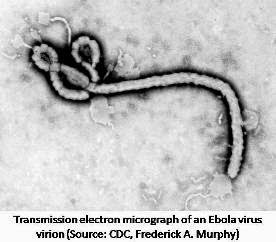
Ebola Virus Disease Outbreak


In March 2014, the Ministry of Health of Guinea notified WHO of a rapidly evolving outbreak of Ebola virus disease in forested areas of south-eastern Guinea. As of 22 March 2014, 49 cases including 29 deaths (case fatality ratio: 59%) had been reported. The disease later spread to the neighbouring countries of Liberia and Sierra Leone. It recently spread to Nigeria through a traveller from Liberia. Between 12 and 13 August 2014, a total of 152 new cases of Ebola virus disease (laboratory-confirmed, probable, and suspect cases) as well as 76 deaths were reported from Guinea, Liberia, Nigeria and Sierra Leone. As of 13 August 2014, total 2127 cases, including 1310 confirmed, 594 probable, and 223 suspect cases of Ebola virus disease have been recorded in Guinea, Liberia, Nigeria, and Sierra Leone resulting in 1145 human deaths.
The disease (previously known as Ebola haemorrhagic fever) is a severe zoonotic and often fatal disease that affects humans and nonhuman primates. It got its name because it was first recognized in a village situated near Ebola River in the Democratic Republic of the Congo (formerly Zaire) in Africa. Since its initial recognition in 1976, the disease outbreaks have been recorded in Africa. These are usually associated with very high case fatality rates up to 90%. The disease is caused by Ebolavirus. Current evidence suggests that fruit bats of the Pteropodidae family are the natural host for ebolaviruses. The virus is transmitted to people from wild animals (primates) and once the virus has entered the population, it can spread from person to person. Ebola virus disease outbreaks can devastate families and communities, but the infection can be controlled through the use of recommended protective measures in clinics and hospitals, at community gatherings, or at home. WHO recommends standard precautions in the care and treatment of all patients regardless of their perceived or confirmed infectious status. They include the basic level of infection control - hand hygiene, use of personal protective equipment to avoid direct contact with blood and body fluids, prevention of needle stick and injuries from other sharp instruments, and a set of environmental controls.

Source: WHO, CDC, Garg S.R. 2014. Ebola Haemorrhagic Fever. In: Garg S.R. (Ed.) Zoonoses: Viral, Rickettsial and Prion Diseases. Daya Publishing House, New Delhi. pp. 244-254.

Friday, May 30, 2014

Middle East Respiratory Syndrome Coronavirus Infection

Coronaviruses are a large family of viruses that cause a range of illnesses in humans and animals. The Middle East respiratory syndrome coronavirus (MERS-CoV) that causes MERS was first identified in 2012 in Saudi Arabia. Since then, globally, 635 laboratory-confirmed cases of infection with MERS-CoV have officially been reported to WHO, including 193 deaths. The affected countries in the Middle East include Jordan, Kuwait, Oman, Qatar, Saudi Arabia (KSA), United Arab Emirates (UAE) and Yemen; in Africa: Egypt and Tunisia; in Europe: France, Germany, Greece, Italy and the United Kingdom; in Asia: Malaysia and Philippines; and in North America: the United States of America (USA). All of the cases recently reported outside the Middle East (Egypt, Greece, Malaysia, the Philippines and the USA) recently travelled from countries inside of the Middle East (KSA or UAE). 

According to the Expert Meeting held in Oman recently, health experts and veterinarians are among those calling for stepped up monitoring, investigations, and immediate reporting of cases of the potentially fatal MERS, whose origins may be linked to animals. A declaration at a regional technical consultation meeting, convened by FAO and the Ministry of Agriculture and Fisheries of the Sultanate of Oman, warned countries in the region and beyond of the need for public health and veterinary authorities to carry out coordinated investigations, and share information and results. The majority of cases have occurred through human-to-human transmission, however it remains to be determined if people may have been infected by contact with environmental or animal sources. Several studies have reported high proportions of camels with antibodies against MERS-CoV or that of a closely-related virus, both in countries where human cases were detected and also in countries with no reported cases. Some of these studies have shown that MERS-CoV has been circulating in camels in Saudi Arabia since at least 1992. Genetic evidence of MERS-CoV infection was found in tests of camel samples from a farm in Qatar and in other studies in Egypt and Saudi Arabia. 

Source: WHO and FAO

Friday, March 28, 2014

India and WHO South-East Asia Region Certified Polio-Free

India as well as the WHO South-East Asia Region were certified polio-free on 27 March 2014 by an independent commission under the WHO certification process. WHO’s South-East Asia Region comprises 11 Member States: Bangladesh, Bhutan, Democratic People’s Republic of Korea, India, Indonesia, Maldives, Myanmar, Nepal, Sri Lanka, Thailand and Timor-Leste. With this step, 80% of the world’s population now lives in certified polio-free regions. Before a Region can be certified polio-free, several conditions must be satisfied such as: at least three years of zero confirmed cases due to indigenous wild poliovirus; excellent laboratory-based surveillance for poliovirus; demonstrated capacity to detect, report, and respond to imported cases of poliomyelitis; and assurance of safe containment of polioviruses in laboratories (introduced since 2000). Certification of the Region comes as countries prepare for the introduction of inactivated polio vaccine (IPV) in routine immunization as part of the eventual phasing out of oral polio vaccines (OPV). More than 120 countries currently use only OPV. These countries will introduce a dose of IPV by the end of 2015 as part of their commitment to the global polio endgame plan which aims to ensure a polio-free world by 2018.

Historically, India has been the largest endemic reservoir of polio in the world with between 50 000 to 100 000 paralytic polio cases occurring each year between 1978 and 1995. It has also been one of the main sources of polio importation for other countries. This achievement has been driven by the partnership between the Government of India, international organizations, local NGOs and other institutions. An extraordinary mobilization of health workers was necessary to reach this point, particularly in the Uttar Pradesh and Bihar states. The outcome of this has been an improved vaccine delivery system, better trained health staff and high quality surveillance, monitoring and research mechanisms. While celebrating the historic achievement, the Regional Director for the WHO South-East Asia Region, Dr. Poonam Khetrapal Singh, also sounded a word of caution to maintain high vigilance against importation of polio. “Until polio is globally eradicated, all countries are at risk and the Region’s polio-free status remains fragile. High immunization coverage can prevent an imported virus from finding an underimmunized, susceptible population. A sensitive surveillance system, able to quickly detect and identify any importation and guide a programmatic response, is critical,” she added.

Source: World Health Organization, Regional Office for South-East Asia, New Delhi